
The Future of IoT in 2030
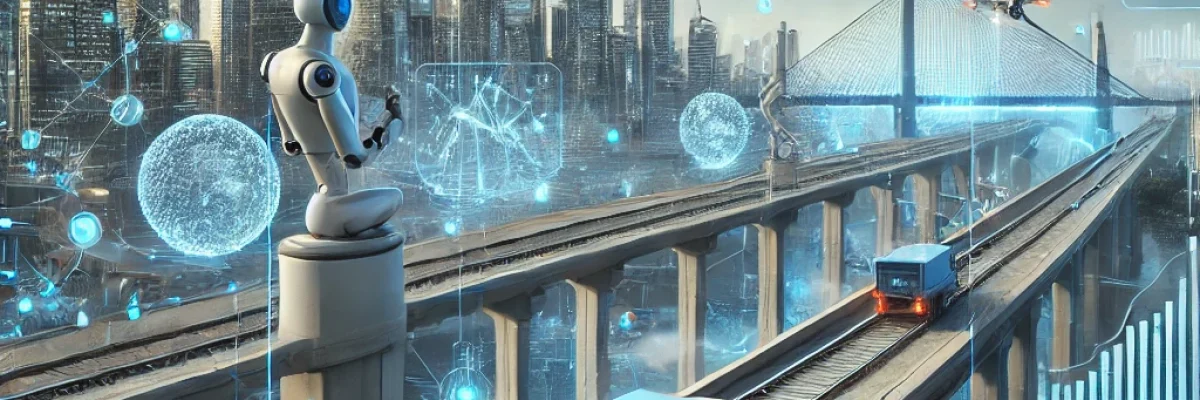
The Internet of Things (IoT) has already revolutionized industries, households, and urban living. By 2030, its impact is anticipated to grow exponentially. This article dives into the advancements, challenges, and possibilities shaping the IoT landscape, offering insight into how interconnected devices will shape our everyday lives and industries in the near future.
The Rise of Ubiquitous Connectivity
The future of IoT in 2030 will be deeply enabled by the rise of ubiquitous connectivity, driven by the maturity of 5G networks and the arrival of 6G. These advanced wireless technologies will offer unprecedented bandwidth and near-zero latency, allowing billions of devices to communicate seamlessly in real time. Smart cities will benefit immensely as connected infrastructure, such as traffic systems and energy grids, leverages this connectivity to optimize resource usage and reduce urban congestion. Healthcare systems will see exponential enhancements as wearable devices and remote monitoring equipment become more sophisticated, transmitting rich data streams to analyze patient health dynamically and improve clinical outcomes. In industrial automation, factories will harness ultra-reliable wireless communication to implement autonomous systems that ensure higher efficiency and precision. Breakthroughs in microchip miniaturization and sensor technology will fuel the expansion, with tiny, ultra-efficient sensors woven into everyday objects, creating an “Internet of Everything.” However, as the number of devices grows, ensuring interoperability will remain a challenge. By 2030, IoT standards may evolve toward a unified global framework, establishing protocols for cross-device compatibility and seamless data exchange across diverse ecosystems. The promise of IoT in 2030 hinges on these interconnected advancements.
Smart Homes and Hyper-Personalized Experiences
By 2030, IoT-enabled smart homes will redefine the very idea of residential living, turning houses into truly intelligent ecosystems. Using AI-infused IoT, these spaces will adapt seamlessly to individual lifestyles, creating hyper-personalized environments. Devices won’t just follow commands but will learn behavioral patterns to anticipate needs. For example, coffee machines will brew the perfect cup in sync with an occupant’s wake-up schedule, while smart lighting adjusts to preferred brightness and hue based on time and mood. IoT-powered appliances will also revolutionize energy efficiency. Advanced sensors and intelligent algorithms will continuously optimize energy usage by syncing with weather data, utility rates, and consumption habits. Imagine refrigerators that notify residents about expiring food or washing machines that select the best time to run for both cost and environmental efficiency. Voice assistants, integrated with IoT systems, will evolve into proactive coordinators, capable of dynamically managing schedules, shopping lists, and home operations. Security will be enhanced with biometric systems and connected cameras that instantly detect and respond to potential threats. Far beyond convenience, these innovations will deliver sustainable, secure, and deeply customized living, changing the very essence of how we interact with our homes.
The Convergence of IoT and Artificial Intelligence
By 2030, the fusion of IoT and artificial intelligence will redefine the concept of autonomy, enabling systems to operate with minimal human intervention. This convergence transforms IoT devices into intelligent ecosystems capable of learning, adapting, and making decisions in real time. AI will enhance IoT’s ability to analyze the massive volumes of data generated by connected devices, unlocking predictive and prescriptive insights and driving operational efficiency across industries. Key to this transformation is edge computing, where data is processed near the source—closer to IoT devices—reducing latency, improving response times, and enhancing security by limiting the flow of sensitive information to centralized servers. This infrastructure will enable time-critical applications such as autonomous vehicles, which rely on instantaneous decision-making to ensure safety and efficiency. Similarly, predictive maintenance in manufacturing will harness these capabilities to anticipate equipment failures, minimizing downtime and improving productivity. Supply chain optimization will also see dramatic innovation, as IoT devices equipped with AI analyze real-time logistics data to autonomously adapt delivery routes, inventory levels, and warehouse operations. These advancements illustrate the profound synergy between IoT and AI, catalyzing systems that not only execute tasks but also learn and evolve continuously.
Ethical and Regulatory Challenges in IoT Development
The explosive growth of IoT by 2030 amplifies ethical and regulatory challenges in unprecedented ways. The deluge of interconnected devices generates vast amounts of personal and behavioral data, intensifying *data privacy fears*. Many IoT systems now monitor intimate aspects of life—from health metrics to daily routines—raising concerns over who controls this data and how it can be misused. Unauthorized surveillance by governments and corporations becomes a pressing issue, potentially eroding individual freedom and autonomy. Cybersecurity vulnerabilities pose another critical challenge. As the IoT ecosystem expands, its attack surface grows exponentially, leaving everything from autonomous vehicles to municipal infrastructures susceptible to breaches. A single cyberattack could have cascading effects, risking not just individual safety but broader societal stability. Equally worrying is *digital inclusion*. While IoT promises extraordinary benefits, it risks deepening divides between technology-rich and underserved populations. Without proactive steps, marginalized communities may lack access, unintentionally deepening economic and social disparities. Efforts to address these risks are underway. The European Union’s General Data Protection Regulation (GDPR) inspires frameworks to safeguard consumer privacy globally. Meanwhile, initiatives like the U.S. IoT Cybersecurity Improvement Act lay groundwork for secure device design. By 2030, consistent global and regional frameworks must balance fostering innovation with protecting human rights and ensuring equitable access.
IoT’s Role in Building a Sustainable Future
By 2030, the Internet of Things (IoT) will significantly push global sustainability forward, offering unparalleled tools for addressing environmental challenges. Interconnected devices will play a pivotal role in optimizing energy consumption. Smart energy grids, driven by IoT sensors, will balance supply and demand dynamically, minimizing waste and reducing reliance on fossil fuels. Connected homes and industries will leverage real-time monitoring to fine-tune energy usage, while electric vehicles will integrate seamlessly into city grids, serving as both consumers and providers of energy. In agriculture, IoT is set to revolutionize food production. Soil sensors, weather-monitoring drones, and water management systems will assist farmers in reducing waste while maintaining high yields. Smart irrigation, for example, will minimize water usage while ensuring crops receive optimal hydration. Meanwhile, IoT-enabled climate-tracking solutions will deliver granular data, empowering both governments and businesses to respond proactively to environmental changes and natural disasters. Circular economy initiatives will flourish with IoT devices facilitating precise tracking of resources and waste management. Smart recycling bins and automated sorting systems will enhance material recovery, reducing landfill dependency. However, embracing these innovations demands caution. As IoT expands, aligning its capabilities with ecological responsibility will be critical to avoid exacerbating e-waste or resource overuse. Policymakers and innovators must prioritize sustainable IoT designs, ensuring technology enhances rather than undermines environmental goals.
Conclusions
By 2030, IoT will transform our world into an interconnected ecosystem, driving smarter homes, cities, industries, and sustainability initiatives. With advancements in AI, connectivity, and ethical policies, IoT’s role will grow while addressing challenges like data privacy and cybersecurity. The future promises a world where devices work seamlessly to improve lives, optimize resources, and redefine human interaction with technology.
The Rise of Ubiquitous Connectivity
The future of IoT in 2030 will be deeply enabled by the rise of ubiquitous connectivity, driven by the maturity of 5G networks and the arrival of 6G. These advanced wireless technologies will offer unprecedented bandwidth and near-zero latency, allowing billions of devices to communicate seamlessly in real time. Smart cities will benefit immensely as connected infrastructure, such as traffic systems and energy grids, leverages this connectivity to optimize resource usage and reduce urban congestion. Healthcare systems will see exponential enhancements as wearable devices and remote monitoring equipment become more sophisticated, transmitting rich data streams to analyze patient health dynamically and improve clinical outcomes. In industrial automation, factories will harness ultra-reliable wireless communication to implement autonomous systems that ensure higher efficiency and precision. Breakthroughs in microchip miniaturization and sensor technology will fuel the expansion, with tiny, ultra-efficient sensors woven into everyday objects, creating an “Internet of Everything.” However, as the number of devices grows, ensuring interoperability will remain a challenge. By 2030, IoT standards may evolve toward a unified global framework, establishing protocols for cross-device compatibility and seamless data exchange across diverse ecosystems. The promise of IoT in 2030 hinges on these interconnected advancements.
Smart Homes and Hyper-Personalized Experiences
By 2030, IoT-enabled smart homes will redefine the very idea of residential living, turning houses into truly intelligent ecosystems. Using AI-infused IoT, these spaces will adapt seamlessly to individual lifestyles, creating hyper-personalized environments. Devices won’t just follow commands but will learn behavioral patterns to anticipate needs. For example, coffee machines will brew the perfect cup in sync with an occupant’s wake-up schedule, while smart lighting adjusts to preferred brightness and hue based on time and mood. IoT-powered appliances will also revolutionize energy efficiency. Advanced sensors and intelligent algorithms will continuously optimize energy usage by syncing with weather data, utility rates, and consumption habits. Imagine refrigerators that notify residents about expiring food or washing machines that select the best time to run for both cost and environmental efficiency. Voice assistants, integrated with IoT systems, will evolve into proactive coordinators, capable of dynamically managing schedules, shopping lists, and home operations. Security will be enhanced with biometric systems and connected cameras that instantly detect and respond to potential threats. Far beyond convenience, these innovations will deliver sustainable, secure, and deeply customized living, changing the very essence of how we interact with our homes.
The Convergence of IoT and Artificial Intelligence
By 2030, the fusion of IoT and artificial intelligence will redefine the concept of autonomy, enabling systems to operate with minimal human intervention. This convergence transforms IoT devices into intelligent ecosystems capable of learning, adapting, and making decisions in real time. AI will enhance IoT’s ability to analyze the massive volumes of data generated by connected devices, unlocking predictive and prescriptive insights and driving operational efficiency across industries. Key to this transformation is edge computing, where data is processed near the source—closer to IoT devices—reducing latency, improving response times, and enhancing security by limiting the flow of sensitive information to centralized servers. This infrastructure will enable time-critical applications such as autonomous vehicles, which rely on instantaneous decision-making to ensure safety and efficiency. Similarly, predictive maintenance in manufacturing will harness these capabilities to anticipate equipment failures, minimizing downtime and improving productivity. Supply chain optimization will also see dramatic innovation, as IoT devices equipped with AI analyze real-time logistics data to autonomously adapt delivery routes, inventory levels, and warehouse operations. These advancements illustrate the profound synergy between IoT and AI, catalyzing systems that not only execute tasks but also learn and evolve continuously.
Ethical and Regulatory Challenges in IoT Development
The explosive growth of IoT by 2030 amplifies ethical and regulatory challenges in unprecedented ways. The deluge of interconnected devices generates vast amounts of personal and behavioral data, intensifying *data privacy fears*. Many IoT systems now monitor intimate aspects of life—from health metrics to daily routines—raising concerns over who controls this data and how it can be misused. Unauthorized surveillance by governments and corporations becomes a pressing issue, potentially eroding individual freedom and autonomy. Cybersecurity vulnerabilities pose another critical challenge. As the IoT ecosystem expands, its attack surface grows exponentially, leaving everything from autonomous vehicles to municipal infrastructures susceptible to breaches. A single cyberattack could have cascading effects, risking not just individual safety but broader societal stability. Equally worrying is *digital inclusion*. While IoT promises extraordinary benefits, it risks deepening divides between technology-rich and underserved populations. Without proactive steps, marginalized communities may lack access, unintentionally deepening economic and social disparities. Efforts to address these risks are underway. The European Union’s General Data Protection Regulation (GDPR) inspires frameworks to safeguard consumer privacy globally. Meanwhile, initiatives like the U.S. IoT Cybersecurity Improvement Act lay groundwork for secure device design. By 2030, consistent global and regional frameworks must balance fostering innovation with protecting human rights and ensuring equitable access.
IoT’s Role in Building a Sustainable Future
By 2030, the Internet of Things (IoT) will significantly push global sustainability forward, offering unparalleled tools for addressing environmental challenges. Interconnected devices will play a pivotal role in optimizing energy consumption. Smart energy grids, driven by IoT sensors, will balance supply and demand dynamically, minimizing waste and reducing reliance on fossil fuels. Connected homes and industries will leverage real-time monitoring to fine-tune energy usage, while electric vehicles will integrate seamlessly into city grids, serving as both consumers and providers of energy. In agriculture, IoT is set to revolutionize food production. Soil sensors, weather-monitoring drones, and water management systems will assist farmers in reducing waste while maintaining high yields. Smart irrigation, for example, will minimize water usage while ensuring crops receive optimal hydration. Meanwhile, IoT-enabled climate-tracking solutions will deliver granular data, empowering both governments and businesses to respond proactively to environmental changes and natural disasters. Circular economy initiatives will flourish with IoT devices facilitating precise tracking of resources and waste management. Smart recycling bins and automated sorting systems will enhance material recovery, reducing landfill dependency. However, embracing these innovations demands caution. As IoT expands, aligning its capabilities with ecological responsibility will be critical to avoid exacerbating e-waste or resource overuse. Policymakers and innovators must prioritize sustainable IoT designs, ensuring technology enhances rather than undermines environmental goals.
Conclusions
By 2030, IoT will transform our world into an interconnected ecosystem, driving smarter homes, cities, industries, and sustainability initiatives. With advancements in AI, connectivity, and ethical policies, IoT’s role will grow while addressing challenges like data privacy and cybersecurity. The future promises a world where devices work seamlessly to improve lives, optimize resources, and redefine human interaction with technology.